The cost to visit Rocky Mountain in 2026 is reasonable on paper — a $35 vehicle pass, $35 campsites, a free park shuttle — but there’s one wrinkle that sets this park apart from almost every other big-name park this year: it still requires a timed-entry reservation to get in during peak hours. Knowing how that system works is the difference between a smooth trip and sitting at the entrance station turned away. A solo camper can do three nights here for around $160. A couple lands near $320. A family of four runs $450–$650. Here’s exactly where every dollar of the real cost to visit Rocky Mountain goes — fees, the timed-entry permit, camping, Estes Park, and the mile-high scenery that costs nothing.
This post contains affiliate links. If you purchase through our links, we may earn a small commission at no extra cost to you — thanks for supporting TravelCheapUS!
Entry Fees
Rocky Mountain charges $35 per vehicle for a 7-day pass, covering everyone in the car. A 1-day vehicle pass is $30, motorcycles are $30, and walkers or cyclists pay $20 per person. The park-specific annual pass is $70, but the America the Beautiful Pass at $80 is the smarter buy if you’ll visit any other park within the year. Seniors 62+ get the $80 lifetime or $20 annual senior pass; military, veterans, and 4th-grade families enter free.
The Timed-Entry Permit (Read This Before You Go)
This is the part that trips up first-time visitors. From May 22 through mid-October 2026, Rocky Mountain requires a timed-entry reservation on top of your entrance pass during busy hours. There are two versions:
- Timed Entry (standard): needed to enter the park 9 a.m.–2 p.m. daily, May 22–Oct 12. Covers everything except the Bear Lake Road corridor.
- Timed Entry + Bear Lake Road: needed to enter the Bear Lake corridor 5 a.m.–6 p.m. daily, May 22–Oct 18. This is the one you want if Bear Lake, Dream Lake, or Emerald Lake are on your list.
Each reservation costs a $2 non-refundable fee on Recreation.gov — separate from your entrance fee. They’re released in two waves: a block on May 1 for late-May through June, then the rest at 7 p.m. MDT the night before your arrival date. Set a reminder for that 7 p.m. drop — that’s how budget-conscious, last-minute planners get in.
The free workaround: the standard timed-entry window doesn’t start until 9 a.m. Enter before 9 a.m. or after 2 p.m. and you skip the standard reservation entirely — you’ll still need your entrance pass, but no $2 permit and no scramble. (Bear Lake Road is the exception; its window runs 5 a.m.–6 p.m.) Early entry also lands you the best wildlife viewing and a parking spot before the lots fill.
Getting There
Most visitors fly into Denver International (DEN) and drive about 1.5–2 hours northwest to Estes Park, the main eastern gateway and the best budget basecamp for the park — see these free and cheap things to do in Estes Park on our companion directory. The west side is reached through Grand Lake, a longer and quieter drive. There’s no train, so this is a road trip — but Denver itself is worth a day on either end, with free U.S. Mint tours, the gold-domed State Capitol, and Red Rocks before you head for the mountains.
Once you’re at the park, you may not need to drive much at all. The free park shuttle runs the Bear Lake Road and Moraine Park routes in summer, and the Estes Park hiker shuttle connects town to the park-and-ride. Riding the shuttle dodges the corridor’s notorious full-by-8-a.m. parking lots — and if you only use Bear Lake Road via the shuttle from the park-and-ride, you can skip the Bear Lake timed permit too.
Where to Stay
Inside the park, the developed campgrounds — Moraine Park, Glacier Basin, Aspenglen, and Timber Creek — run about $35 per night in summer, reserved through Recreation.gov. Moraine Park is open year-round and sits right on the free shuttle route; Glacier Basin has its own shuttle stop. These book out months ahead for July and August, so grab a site the day your dates open.
Outside the park, Estes Park is the hub, and summer rates run $150–$300+ a night at peak. Grand Lake on the west side and Lyons or Loveland down the canyon tend to run cheaper. If you want a roof, compare current rates for hotels in Estes Park on Booking.com, and book midweek to dodge the weekend surge.
Food Costs
Estes Park is a tourist town, so expect $13–$18 breakfasts and $20–$32 dinners along the main drag. There’s no in-park dining to speak of beyond a couple of small snack spots, so plan to bring your own food into the park regardless.
The budget play is the usual one: stock a cooler at the Safeway in Estes Park and picnic at the trailheads and overlooks. Every campground has tables, and a sandwich beside an alpine lake beats any restaurant in town. Done this way, food runs $12–$18 per person per day.
What to Do (Almost All of It Free)
Once you’re in, nearly everything is free. Trail Ridge Road — the highest continuous paved road in the country, topping out above 12,000 feet — is a free drive with tundra views, open roughly Memorial Day through mid-October. Bear Lake, Dream Lake, and Emerald Lake form one of the best easy-to-moderate hikes in the park, free with your entry and permit. Alberta Falls, Sprague Lake, and the Moraine Park elk meadows cost nothing, and the wildlife — elk, moose, bighorn sheep — is free theater, especially at dawn. You could fill four days here on entry fees alone.
The Real Cost to Visit Rocky Mountain: Sample Budget
Here’s a realistic 3-night camping trip for two people, not counting how you get to Colorado:
| Expense | Cost |
|---|---|
| Entry fee (vehicle pass) | $35 |
| Timed-entry permits (2 days × $2) | $4 |
| Campground (3 nights × $35) | $105 |
| Gas (Denver round trip + local) | $60 |
| Groceries and food (3 days, 2 people) | $90 |
| One dinner out in Estes Park for two | $55 |
| Total | ~$349 for two (~$175/person) |
Enter early to skip the standard permit, pack all your meals, and the same trip drops near $130 per person — that’s the lean version of the cost to visit Rocky Mountain. A family of four sharing a campsite adds mostly food: figure $450–$650 for the full experience. If you already carry an America the Beautiful Pass, take $35 off everything above.
Tips for Cutting the Cost to Visit Rocky Mountain
Enter before 9 a.m. You skip the standard timed-entry permit entirely, beat the parking crush, and catch the best wildlife and light of the day. This is the single best free move at this park.
Ride the free shuttle for Bear Lake Road. Park at the Estes Park park-and-ride and take the shuttle in — no Bear Lake permit needed, no fighting for a lot that fills by 8 a.m.
Camp instead of staying in Estes Park. A $35 Moraine Park site versus a $250 summer hotel room is the biggest saving on the board — and you wake up already inside the park.
Set a 7 p.m. alarm the night before. That’s when next-day timed-entry permits drop on Recreation.gov. Last-minute planners who catch that window get in for $2.
Drive Trail Ridge Road for the free showstopper. The country’s highest paved through-road is included with entry — no extra fee, no permit beyond your standard entry, and the best view-per-dollar in the park.
Exploring more of the state? See free and cheap things to do across Colorado on our companion directory — from Garden of the Gods to Boulder’s Flatirons.
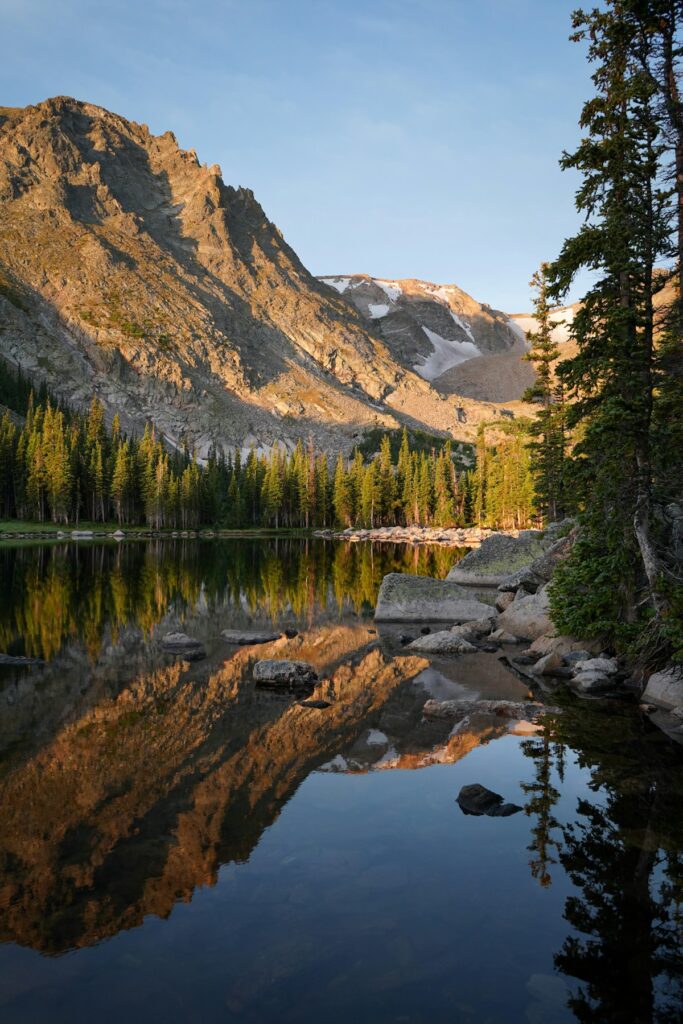
Photo by Dylan Taylor on Unsplash