
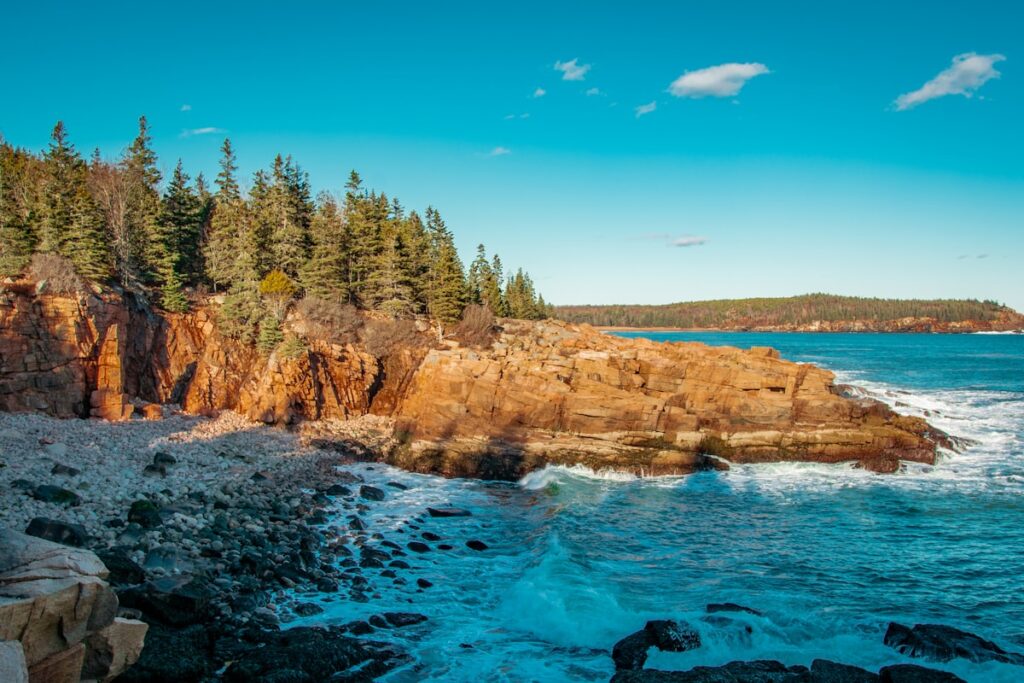
The cost to visit Acadia in 2026 is one of the gentler national-park bills in America — mostly because the park’s single best budget tool, the free Island Explorer shuttle, erases the gas and parking costs that pile up everywhere else. Acadia packs granite coastline, mountain summits, and 45 miles of car-free carriage roads onto one island, all behind a $35 vehicle pass. A solo camper can do three nights for around $180. A couple lands near $350. A family of four runs $500–$700, most of it lodging. Here’s exactly where every dollar of the real cost to visit Acadia goes — fees, the Cadillac reservation, camping, Bar Harbor, and the enormous amount of coastline that costs nothing.
This post contains affiliate links. If you purchase through our links, we may earn a small commission at no extra cost to you — thanks for supporting TravelCheapUS!
Entry Fees
Acadia charges $35 per vehicle for a 7-day pass, covering everyone in the car. Motorcycles are $30, and walkers or cyclists pay just $20 per person for seven days — the cheapest way in if you’re not driving the loop road. The park-specific annual pass is $55, but the America the Beautiful Pass at $80 is the better buy if you’ll hit even one more park within the year. Seniors 62+ pay $20 for their annual version; military, veterans, and 4th-grade families get in free.
There’s one extra fee unique to Acadia: a $6 vehicle reservation to drive the Cadillac Summit Road, required from May 20 through October 25, 2026. You pick a sunrise window (90 minutes) or a daytime window (30 minutes) on Recreation.gov, and you still need your entrance pass on top of it. The budget move: hiking or biking to the Cadillac summit is free and needs no reservation — the South Ridge Trail is a classic. One 2026 note: as of January 1, non-U.S. residents 16 and older now pay an extra $100 surcharge to enter Acadia and ten other marquee parks. U.S. visitors are unaffected.
Getting There
Acadia sits on Mount Desert Island on Maine’s central coast, with the gateway town of Bar Harbor right at its edge. Your cheapest air option is usually Bangor International (BGR), about 50 miles and a 90-minute drive away. The tiny Hancock County–Bar Harbor airport (BHB) is closer but seasonal and pricier. From Boston, it’s a 280-mile, roughly five-hour drive — doable as a one-way fly-into-Boston, drive-up trip if the fare gap is big enough.
No train serves Bar Harbor, but Concord Coach Lines runs a seasonal bus from Boston and Portland straight to Bar Harbor — a genuine car-free option, since once you’re on the island the free shuttle takes over. If you do drive, budget gas for the trip up plus modest local driving; the island itself is small and the loop road is only 27 miles.
Getting Around: The Free Island Explorer
This is Acadia’s budget superpower. The Island Explorer is a network of fare-free propane buses linking Bar Harbor, the campgrounds, the trailheads, the beaches, and the village centers. Full service runs roughly June 23 through October 12, 2026, with some spring routes starting as early as May 20. It stops at Blackwoods and Seawall campgrounds, Sand Beach, Jordan Pond, and the airport.
What that means for your wallet: you can skip the rental car entirely, avoid paying for parking that fills up by 9 a.m. in summer, and hike point-to-point instead of doubling back to your car. For a budget traveler, the Island Explorer is the single biggest reason Acadia comes in cheaper than most marquee parks. Pair it with a $20 walker/biker pass and your in-park transportation cost is effectively zero. For a full rundown of the town’s free options, see these free and cheap things to do in Bar Harbor on our companion directory.
Where to Stay
Inside the park, camping is the budget play and it’s a good one. Blackwoods, five miles south of Bar Harbor and right on an Island Explorer route, runs $30 per night. Seawall, on the quieter west side, runs $22–$30 per night. Schoodic Woods, on the mainland peninsula, is the sleeper pick — modern sites, never crowded, similar prices. All three book through Recreation.gov, and Blackwoods in particular goes fast for July, so reserve the moment your dates open.
Outside the park, this is where the budget gets tested. Bar Harbor is a peak summer resort town, and July is its busiest, priciest month — expect motels and inns to run $230–$400+ a night, with the nicer waterfront places higher still. Shoulder-season rates (late May, or September into October) drop sharply, sometimes to the $140–$200 range. If you want a roof over your head, compare current rates for hotels in Bar Harbor on Booking.com, or look at Ellsworth and Trenton just off the island for cheaper rooms a short drive out.
Food Costs
Bar Harbor is a tourist town, so restaurant prices run resort-level: a sit-down breakfast is $14–$20, a lobster roll $25–$35, a dinner entrée $24–$40. The one famous splurge worth weighing is tea and popovers at the Jordan Pond House (around $15–$20) — pricey, but the pond-and-mountains view is the actual product.
The budget play is the same as every park: stock a cooler at the Hannaford in Bar Harbor or Ellsworth and picnic your way around the island. Every campground has tables, and a sandwich at Sand Beach or on a Park Loop Road overlook beats most restaurant tables anyway. Done this way, food runs $12–$18 per person per day.
What to Do (Almost All of It Free)
The coast: The 27-mile Park Loop Road strings together Sand Beach, Thunder Hole, Otter Cliff, and the Ocean Path — all free with your entry. The carriage roads: 45 miles of crushed-stone, car-free roads built by the Rockefellers, free for walking and biking, with their famous stone bridges. The summits: hiking Cadillac, the Beehive, or the Precipice costs nothing and skips the $6 summit-road reservation entirely. The water: Jordan Pond, Echo Lake’s swimming beach, and the Bass Harbor Head Light are all free. You could fill four full days here without paying a cent beyond your entrance pass.
The Real Cost to Visit Acadia: Sample Budget
Here’s a realistic 3-night camping trip for two people, not counting how you get to Maine:
| Expense | Cost |
|---|---|
| Entry fee (vehicle pass) | $35 |
| Blackwoods campground (3 nights × $30) | $90 |
| Cadillac Summit Road reservation | $6 |
| Local gas (loop road + town) | $40 |
| Groceries and food (3 days, 2 people) | $90 |
| One lobster dinner + Jordan Pond popovers for two | $95 |
| Total | ~$356 for two (~$178/person) |
Skip the Cadillac drive (hike it instead) and the lobster dinner, and the same trip drops near $130 per person — that’s the lean version of the cost to visit Acadia. Ride the free Island Explorer and you can shave the local gas line to almost nothing. A family of four sharing a campsite adds mostly food: figure $500–$700 for the full experience. If you already carry an America the Beautiful Pass, take $35 off everything above.
Tips for Cutting the Cost to Visit Acadia
Ride the free Island Explorer, skip the parking fight. Park your car at the campground or in Bar Harbor and let the shuttle do the rest. You’ll save gas, dodge the lots that fill by mid-morning, and be free to hike one-way trails.
Hike Cadillac instead of driving it. The summit road needs a $6 reservation that sells out; the South Ridge Trail to the same summit is free and needs nothing. Sunrise from the top is the same either way.
Camp instead of staying in Bar Harbor. A $30 Blackwoods site versus a $300 July hotel room is the biggest single saving available. Book it the day your dates open on Recreation.gov.
Buy the $20 walker/biker pass if you’re car-light. Arriving by bus and riding the shuttle? You never need the $35 vehicle pass — the per-person pass covers you for the week.
Visit in September. The crowds thin after Labor Day, the coast is still warm, the foliage starts turning, and Bar Harbor’s hotel rates fall 30–40% from their July peak. It’s the best-value window of the year.
Heading deeper into Maine? See free and cheap things to do across Maine on our companion directory — from Portland’s free lighthouses to Camden’s harbor views.
Photo by Trevor Hayes on Unsplash