
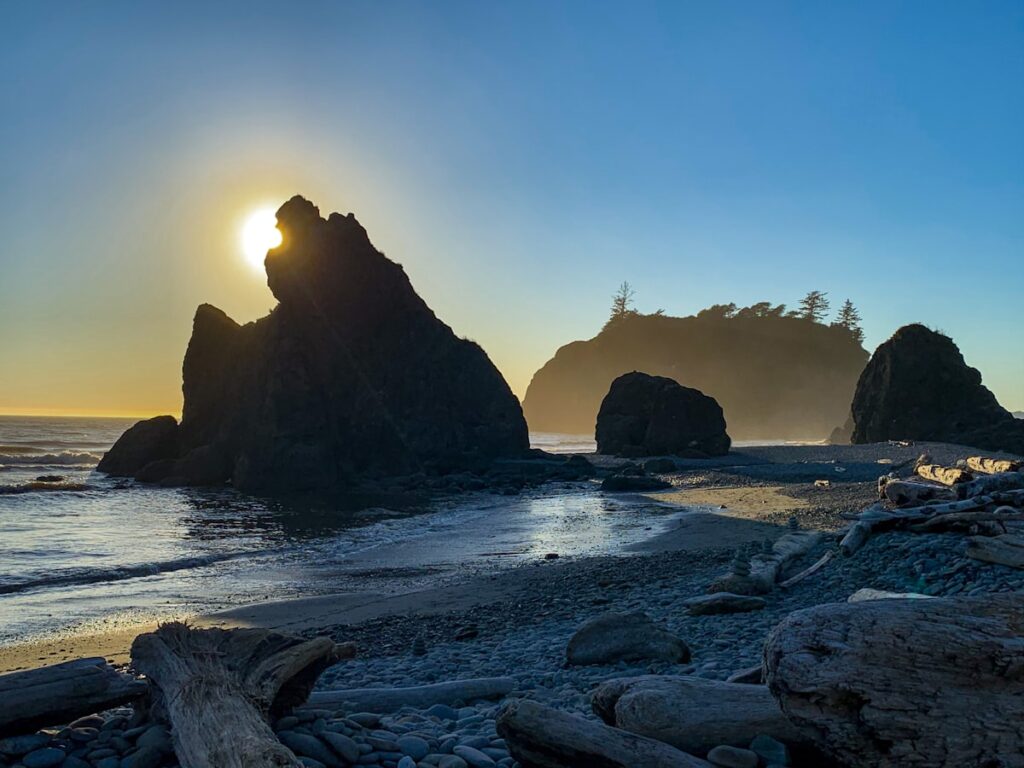
The cost to visit Olympic in 2026 might be the best value in the entire national park system — because this is really three parks for one $30 entry fee. Glacier-capped mountains, moss-draped rainforest, and wild Pacific beaches all sit inside one boundary, and the campgrounds still charge 2010s prices. A solo camper can do a 3-night loop for around $200. A couple lands near $400 with the Seattle ferry included. A family of four runs $550–$700. Here’s where every dollar of the real cost to visit Olympic goes — fees, ferries, campgrounds, gateway towns, and the absurd amount of scenery that costs nothing.
This post contains affiliate links. If you purchase through our links, we may earn a small commission at no extra cost to you — thanks for supporting TravelCheapUS!
Entry Fees
Olympic charges $30 per vehicle for a 7-day pass — $5 less than Yosemite or Zion — covering everyone in the car. Motorcycles are $25, walk-ins and cyclists $15 per person. No timed entry, no reservations to drive in, ever. The park-specific annual pass is $55, but the America the Beautiful Pass at $80 is the better buy if you’ll hit even one more park within a year — and if you’re road-tripping the Northwest, Mount Rainier and North Cascades are both within three hours. Seniors 62+ pay $20 for their annual version; military, veterans, and 4th-grade families are free.
One quirk worth knowing: Olympic has multiple entrances spread around the peninsula (Hurricane Ridge, Hoh, Sol Duc, Staircase), and your 7-day pass works at all of them. The coastal beaches along Highway 101 — Ruby Beach, Kalaloch — have no entrance station at all.
Getting There: The Ferry Math
Olympic wraps around the Olympic Peninsula, about 2.5–3 hours from Seattle. From Sea-Tac you have two routes: drive south around through Tacoma (no ferry, about 30–60 minutes longer) or cross Puget Sound on a Washington State Ferry. The Edmonds–Kingston ferry runs about $21–$22 each way for a car and driver, plus around $11 round trip per adult passenger — kids and teens under 19 ride free. For a couple, that’s roughly $45–$55 round trip to save an hour of driving and start the trip with a sunrise sail across the Sound. Worth it once; skip it both ways if you’re pinching pennies.
Once you’re on the peninsula, there’s no shuttle system — this is a driving park, and the full loop around Highway 101 is over 300 miles. Budget real gas money ($80–$130 depending on how much of the loop you do) and plan your nights so you’re not backtracking. Port Angeles makes the best base for Hurricane Ridge, Lake Crescent, and Sol Duc; Forks or Kalaloch for the rainforest and beaches.
Where to Stay
Inside the park, Olympic’s campgrounds are some of the cheapest at any marquee park: most drive-in campgrounds run just $24 per night — Hoh Rain Forest, Mora near Rialto Beach, Fairholme on Lake Crescent, Heart O’ the Hills below Hurricane Ridge. Oceanfront Kalaloch runs $24–$48 depending on the site, and its bluff sites are the best cheap ocean view in America. Kalaloch and Hoh take summer reservations on Recreation.gov; several other campgrounds stay first-come, first-served — a genuine gift if you’re planning late, since the Yosemite-style booking bloodbath mostly doesn’t exist here.
Outside the park, Port Angeles is the main hub with motels and chains typically running $120–$200 in summer. Forks — yes, the Twilight town — is the budget west-side base at $100–$160. Sequim, in the peninsula’s rain shadow, is a solid sleeper pick with drier weather and similar prices. Compare current rates for hotels in Port Angeles or Forks on Booking.com to see what your dates look like.
Food Costs
The peninsula is small-town America, not resort country, so food prices are gentler than most park gateways — a diner breakfast in Port Angeles or Forks runs $12–$16, a pub dinner $18–$28. Inside the park, options are thin and spread out: a lodge meal at Kalaloch or Lake Crescent runs $20–$40, and there may be nothing else for 40 miles.
The play: stock a cooler at the big grocery stores in Port Angeles or Sequim before heading into the loop, and picnic your way around it. Every campground has tables and potable water, and eating sandwiches at Ruby Beach beats any restaurant on the peninsula anyway. Done this way, food runs $12–$18 per person per day.
What to Do (Three Parks’ Worth of Free)
The mountains: Hurricane Ridge is the drive-up alpine payoff, with mile-high meadow views of the Olympics. One 2026 note — the day lodge that burned in 2023 hasn’t been rebuilt yet, so facilities up top are temporary trailers, and the road saw some early-summer weekday closures for utility work. Check the park’s conditions page the morning you go, and bring your own food and water.
The rainforest: The Hoh Rain Forest’s Hall of Mosses is a 0.8-mile loop through what looks like a fantasy film set, free with entry. The beaches: Ruby Beach and Kalaloch’s sea-stack coastline cost nothing — heads-up that Mora Road access to Rialto Beach is closed July 8 through October 5, 2026 for construction, so aim for Second Beach or Third Beach out of La Push instead. The lakes and falls: Lake Crescent, the Marymere Falls walk, and Sol Duc Falls are all free. The one cheap paid treat worth considering: a soak at Sol Duc Hot Springs ($19 adults, $15 kids and seniors per session) after a day on the trails.
The Real Cost to Visit Olympic: Sample Budget
Here’s a realistic 3-night camping loop for two people starting from Seattle:
| Expense | Cost |
|---|---|
| Entry fee (vehicle pass) | $30 |
| NPS campgrounds (3 nights × $24) | $72 |
| Edmonds–Kingston ferry (car + 2, round trip) | $55 |
| Gas (peninsula loop + Seattle round trip) | $110 |
| Groceries and food (3 days, 2 people) | $90 |
| One dinner out + Sol Duc soak for two | $90 |
| Total | ~$447 for two (~$224/person) |
Skip the ferry and the hot springs and the same trip drops under $180 per person — that’s the lean version of the cost to visit Olympic. A family of four sharing a campsite adds mostly food: figure $600–$750 for the full experience. If you already have an America the Beautiful Pass, take $30 off everything above.
Tips for Cutting the Cost to Visit Olympic
Use the first-come, first-served campgrounds. Fairholme, Heart O’ the Hills, and others don’t take reservations at all. Roll in by late morning on a weekday — even in July — and you’ll usually find a $24 site. This is the last big park where that’s still true.
Pick one base per region instead of looping daily. The peninsula is bigger than it looks — Hurricane Ridge to the Hoh is 2.5 hours one way. Two nights east (Port Angeles side), then two nights west (Forks/Kalaloch side) saves a tank of gas versus daily out-and-backs.
Take the ferry one way, drive the other. You get the Puget Sound crossing experience for half the ferry bill, and the Tacoma route home is barely slower once evening traffic dies down.
Visit in September. The rain mostly holds off until October, the summer crowds evaporate after Labor Day, and gateway hotel rates drop 20–40%. The rainforest, conveniently, looks exactly the same in the rain anyway.
Don’t pay for a beach. Ruby Beach, Kalaloch, and the La Push beaches are free, with no entrance station on the coastal 101 strip. If your trip is mostly coastline, your biggest fee might be parking change.
Photo by Accashia Thomas on Unsplash