
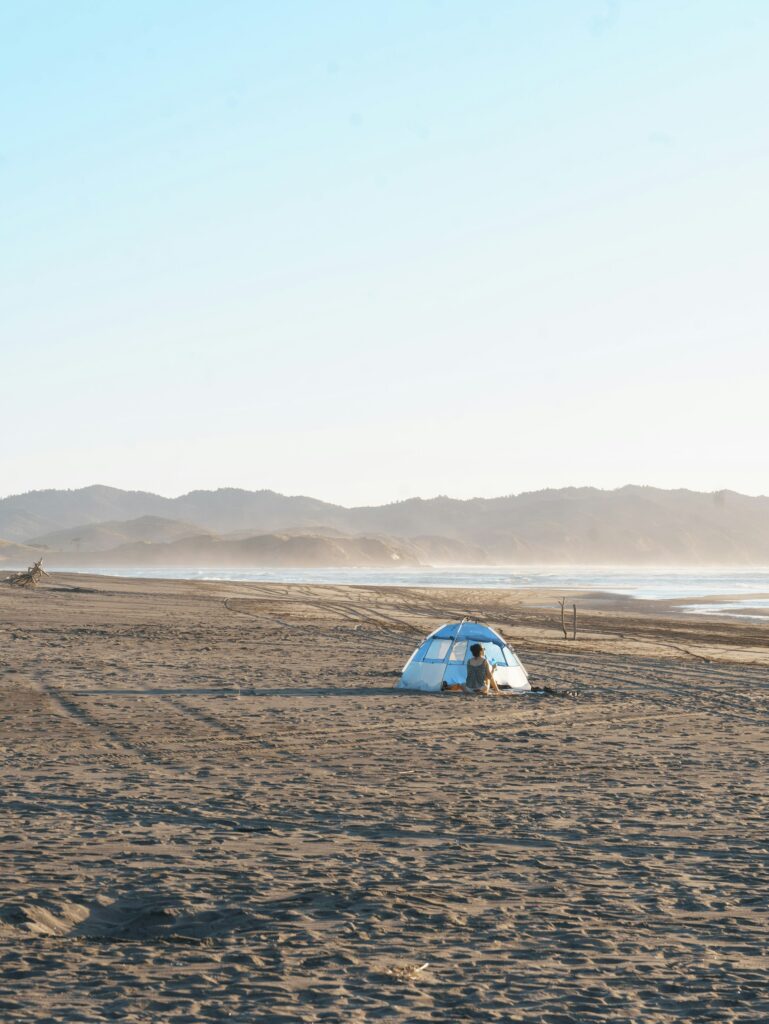
Cheap beach camping is one of the best-kept secrets in budget travel. You can wake up to ocean sunrises, fall asleep to waves, and pay $5 to $25 a night for the privilege — or in a few magical spots, nothing at all. That’s a beach “vacation” for the cost of a couple of restaurant meals, not the cost of a week’s pay.
This guide breaks down the best free and cheap beach camping in the US for summer 2026 — from truly free oceanfront sites at Padre Island to under-$25 state park beaches, plus the reservation realities and gear adjustments that separate a great trip from a sandy disaster.
Why Beach Camping Is a Great Budget Play
A beach hotel in season runs anywhere from $200 to $500 a night. A vacation rental on a barrier island is worse. But beach camping — in the right spot — runs $0 to $25 a night for the same view, the same water, and the same coastal experience. The trade-off is real (you’re in a tent, not a king bed), but for travelers who like the outdoors, beach camping is the highest-leverage budget move in the country.
The catch: truly free oceanfront camping in the lower 48 is rare. California has effectively banned dispersed beach camping. Oregon’s free BLM oceanfront sites have been converted to day-use only. The list of legitimately free oceanfront spots is short. The list of cheap ones (under $25/night) is much longer, and that’s where most of this cheap beach camping guide lives.
Best Free Beach Camping in the US
Padre Island National Seashore, Texas
The single best free oceanfront cheap beach camping in the country. North Beach, South Beach, and Yarborough Pass all allow free dispersed beach camping — you just pull up, pick a spot above the high tide line, and stay. First-come, first-served. The only cost is the park entrance fee ($25 per vehicle, good for 7 days, free with an America the Beautiful pass). 4WD is recommended south of the Malaquite area; sedans should stick to North Beach. Full details on the Padre Island NPS camping page.
If you want a developed site with restrooms and showers, the Malaquite Campground is $14/night (half off with a Senior or Access pass). No hookups, no reservations — show up before noon in summer to secure a spot. For a town basecamp before or after, see free and cheap things to do in Corpus Christi on our companion directory — it’s the nearest city to the park.
Cape Lookout National Seashore, North Carolina
Free primitive beach camping on North Core Banks and South Core Banks — no designated sites, pitch where you like (above the high tide line). The catch: access is by ferry only. Ferry costs are the actual budget line, not the camping. If you want to drive on the beach with a vehicle, the 2026 ORV permit runs $75 for the year ($35 if you can swing the Jan–Mar window). Best for travelers who already have a small boat or who can split a ferry round-trip with a group. See the official Cape Lookout camping page for the current ferry schedule.
Cheap Beach Camping Under $25 a Night
Hammocks Beach State Park, North Carolina — $13/night
The hidden gem of the Carolina coast. Bear Island has primitive oceanfront tent sites at $13/night, ferry included for one round trip per day. No vehicles, no crowds, just a barrier island with miles of undeveloped beach. Season runs May 16 through November 16, 2026. Book early — word is getting out.
Mustang Island State Park, Texas — $13/night
Primitive drive-up beach camping at $13/night, plus a $7 day-use entrance fee. Water/electric sites run $25/night if you need them. Five miles of Gulf Coast beach, no boardwalks, no tourist crush. Reservations open 5 months in advance.
Apostle Islands National Lakeshore, Wisconsin — $15/night
The best Great Lakes beach camping in the country, and it’s only $15/night for an island site (group sites $30). You’ll need a wilderness permit and a way to get to the islands (kayak or charter boat). Reservations open 30 days out, which is unusually short for federal land — less competition.
Pictured Rocks National Lakeshore, Michigan — $5–$15/night
72 backcountry sites along Lake Superior, $5 to $15 a night via Recreation.gov. The cliffs, the colored sandstone, the cold-clear water — this is one of the best beach camping experiences in the country, period. Backcountry sites require you to backpack in, but distances are short (most under 5 miles). For a town stopover before or after the backcountry, see free things to do in Marquette — the nearest city for resupply, 45 miles west.
Cape Hatteras National Seashore, North Carolina — $20–$28/night
No camping on the beach itself, but four NPS campgrounds within walking distance of Atlantic surf. Cape Point Campground runs $20/night; Frisco $28/night, with 50% off for Senior pass holders. Drive-on-beach access available with an ORV permit if you want the full Outer Banks experience. For more on the OBX area, see free and cheap things to do in Nags Head on our companion directory.
Mid-Tier Beach Camping: $25–$45/night
Still cheaper than any beach hotel by a factor of 5–10, and these come with more amenities (water, electric, sometimes Wi-Fi).
- Indiana Dunes National Park, IN — $25/night: Dunewood Campground, 66 sites, season runs April 1 through November 1, 2026. Park pass $25 separate.
- Sleeping Bear Dunes National Lakeshore, MI — $22–$31/night: Platte River and D.H. Day campgrounds. Reservations 6 months out for summer weekends — book the moment the window opens.
- Beverly Beach State Park, OR — $29/night tent: Oregon’s mid-coast state parks all run similar prices (Beverly Beach, Cape Lookout, South Beach). Yurts ~$50/night if you want to skip the tent altogether.
- Bahia Honda State Park, FL Keys — $36/night: Famously hard to book; reservations open 11 months out for Florida residents, 10 for non-residents. Plus a $6.70 reservation fee and a $2.50 Monroe County surcharge.
- Assateague Island National Seashore, MD — $40/night: Wild horses on the beach. Bring a hard-sided cooler — the horses will tear into soft ones. Reservations 6 months out.
- Gulf Islands National Seashore (Fort Pickens), FL — $20–$40/night: 200 sites, hookups available. $25 vehicle entrance separate. Less crowded than the Florida state parks.
The California Beach Camping Reality
California has the most coastline in the lower 48 and almost no cheap beach camping. State law and coastal regulations have effectively banned dispersed beach camping, so every legitimate oceanfront site is a paid state park campground — and they’re not cheap.
- Refugio State Beach — $45/night (dry camping, no hookups)
- Leo Carrillo State Park — $45 tent / $65 RV with electric
- Crystal Cove State Park — $55 no-hookup / $75 with electric
- San Onofre Bluffs (seasonal, mid-May through September)
If you’re set on California beach camping on a budget, your only real move is booking the cheaper inland sites at the same parks (like San Mateo Campground at San Onofre) and driving in to the beach during the day. There is no free beach camping in California. Anyone telling you otherwise is sharing pre-2010 information.
Reservations Reality for Summer 2026
The reservation game for cheap beach camping is rough. Here’s how it actually works:
- Recreation.gov (federal sites): rolling 6-month window, opening at 7 AM Pacific / 10 AM Eastern each day. Summer weekend sites at popular parks vanish within minutes.
- ReserveCalifornia (CA state parks): 6 months ahead.
- Florida state parks: 11 months ahead for residents, 10 for non-residents.
- Texas Parks & Wildlife: 5 months ahead.
If you’re reading this in late May and trying to book July or August beach camping, most popular sites are already gone. Three strategies still work:
- Set cancellation alerts. Apps like Campnab or Wandering Labs scan Recreation.gov for cancellations and ping you immediately. People drop reservations constantly.
- Sliding modification trick: Book the longest stay available (even if you don’t want all those nights), then modify down to your actual dates. Many systems let you keep the booking but trim nights.
- Less popular sites with similar views: Cape Lookout instead of Hatteras, Apostle Islands instead of Sleeping Bear, Hammocks Beach instead of any Florida state park.
For the broader playbook on free camping nationwide (not just beach), see our guide on how to find free camping across America.
Gear Adjustments for Beach Camping
Standard car camping gear will fail you on a cheap beach camping trip. Sand doesn’t hold tent stakes, the sun is brutal, and salt air corrodes everything. A few essential swaps:
- Sand stakes or 9–12″ aluminum/screw-in anchors. Regular tent stakes pull straight out of dry sand. Specialty sand stakes are $15 for a set of four. Bag of rocks under each stake works too.
- Ground tarp or footprint. Sand abrasion will destroy a tent floor in two trips. Always run a tarp underneath.
- Sun shelter or pop-up canopy with weights. Tents heat up brutally on a beach. A separate shade structure is the difference between sleeping in and bailing out by 9 AM.
- Extra-long guy lines staked at sharper angles. Beach wind is a different animal from forest wind. Double-stake everything.
- Quick-dry towels and sealed dry bags for electronics. Salt and humidity are merciless.
- Bear canister if you’re camping at Olympic National Park (raccoons and bears patrol the wilderness coast).
Safety Notes Most Guides Skip
A few cheap beach camping safety notes most guides skip — read these before you go:
- Cape Cod sharks: Great white populations have exploded since the mid-2000s. Don’t swim in murky water, don’t swim near seal colonies, only swim at lifeguarded beaches.
- Rip currents at Cape Hatteras: Text “OBXBeachConditions” to 77295 for daily alerts. If caught in a rip current, swim parallel to shore until you’re out of it — don’t fight straight back in.
- Wild horses at Assateague: Stay 40 feet away, store all food in a hard-sided cooler or locked vehicle. The horses are not pets.
- Tides at Olympic: The wilderness coast requires timing headland crossings with tide tables. Carry one. Plan around the day’s lowest low tide.
- Rialto Beach closure: Mora Road access to Rialto Beach is closed July 8 through October 5, 2026 for construction. Plan for Second Beach, Third Beach, or Shi Shi instead.
Beach Camping FAQs
What’s the cheapest beach camping in the US?
Padre Island National Seashore in Texas, by a wide margin — dispersed beach camping is free with the $25/vehicle park entrance (which covers 7 days). Cape Lookout in North Carolina is also free, but you have to factor in the ferry cost.
Can I just sleep on any beach for free?
No. Almost every public beach in the US prohibits overnight sleeping outside designated campgrounds — rangers patrol and ticket. The handful of legitimately free oceanfront sites (Padre Island, Cape Lookout) are exceptions you have to seek out.
When should I book beach camping for summer 2026?
If you haven’t already, you’re late but not out of options. The 6-month rolling window means October and November sites are opening now. For peak summer (June–August), your best shot is cancellation alerts via Campnab, modifying existing bookings, or pivoting to less-popular sites.
Is beach camping safe?
Generally yes — campgrounds are patrolled and most beach camping spots are families and other campers, not party crowds. Real risks are tide-related (don’t camp below the high tide line), weather-related (storms come in fast), and wildlife-specific (sharks, bears, wild horses depending on location). Common sense and basic prep handle all of it.
Can I have a fire on the beach?
Sometimes — depends entirely on the park. Most National Park Service beaches prohibit ground fires; some allow fires only in designated rings. California has the strictest rules. Always check the specific park website before assuming, and never leave a fire unattended on the sand.
The Bottom Line
Cheap beach camping is one of the most underrated budget travel moves in the US. Whether you go free at Padre Island or pay $13/night for a Hammocks Beach ferry-in site, you’ll save hundreds compared to any beach hotel — and wake up closer to the water than anyone else on the coast.
Related Articles
- How to Find Free Camping Across America
- Best Budget Beach Destinations in the US
- Best State Parks That Rival National Parks (Without the Price Tag)
Photo: Mario Amé / Unsplash