
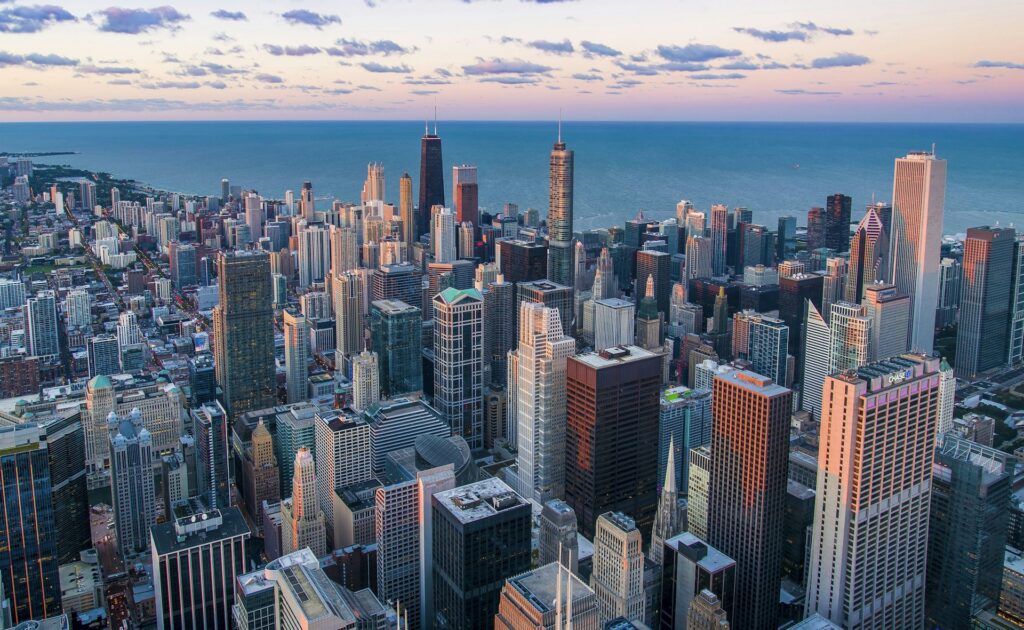
Chicago on a budget is more doable than most travelers think. The third-largest city in America has a reputation for being expensive — and parts of it absolutely are — but Chicago also has more genuinely great free things to do than just about any other major US destination. Free Lincoln Park Zoo. A free 18-mile lakefront trail. Free Cloud Gate (yes, “The Bean” is and always will be free). Free Garfield Park Conservatory. Free Chicago Cultural Center. And a downtown skyline you can take in from a dozen vantage points without spending a dollar.
This guide walks you through a real weekend in Chicago for under $200 — total, not per day. We’re talking two days, two nights, all in: getting around, lodging, food, and a full slate of things to see and do. The numbers are based on current 2026 pricing, including the CTA fare changes that just took effect in January. Let’s get into doing Chicago on a budget right.
Why Chicago Works on a Budget
Chicago does something most expensive big cities don’t: it stacks its best free experiences in the places tourists actually want to be. Millennium Park, Cloud Gate, the lakefront, Navy Pier, the Chicago Cultural Center, the architecture along the river — all free, all in the Loop or steps from it. That means you don’t have to pick between “cheap weekend” and “great weekend.” You can walk out of your hotel and spend a full day doing world-class things without paying a single admission fee.
The other thing working in your favor: Chicago’s public transit (the CTA “L” train and buses) is one of the few US transit systems where you genuinely don’t need a car or rideshare. A $6 day pass replaces an Uber budget entirely.
Getting to Chicago Cheap
Your first big variable is how you get to Chicago. Most travelers doing Chicago on a budget should compare three options before booking anything:
- Megabus or FlixBus: The cheapest option from most Midwest cities. Realistic fares run $15–$40 one-way from Detroit, Indianapolis, Milwaukee, Minneapolis, or St. Louis if you book 3–4 weeks out. Headline $1 fares exist but are rare and require booking months ahead.
- Amtrak Hiawatha (from Milwaukee): $19–$37 one-way, ~89 minutes, seven trains a day. The single best transit deal into Chicago if you’re within driving range of Milwaukee.
- Flying: Frontier and Spirit fly into Midway (MDW) with one-way fares routinely under $40. Southwest dominates MDW with reliable schedules. Pick MDW over O’Hare when you can — it’s closer to the Loop, and the Orange Line gets you downtown in 25 minutes for $2.75. O’Hare’s Blue Line works too, but it’s a longer ride.
If you’re driving in, factor in $30–$60/day for downtown parking. That alone can break a tight budget. Many travelers park at a suburban L stop (most have free or cheap all-day parking) and ride the train in.
Where to Stay in Chicago on a Budget
This is where most weekend budgets get blown. Chicago hotels in the Loop and on the Magnificent Mile routinely run $200–$350/night in season. Here’s how to keep it well under that:
- HI-Chicago Hostel (24 E Congress Pkwy): Dorm beds officially start around $29/night, with realistic averages around $47/night. Sun/Mon/Wed nights are cheapest. Location is unbeatable — walkable to Millennium Park, the lakefront, and Art Institute. Includes Wi-Fi and a self-serve kitchen.
- Lincoln Park budget hotels: 2-star options start around $54/night on KAYAK in shoulder seasons. The neighborhood is safe, leafy, walkable to the zoo and lakefront, and connected to downtown by Brown and Red Lines.
- Wicker Park and Logan Square: Cooler, less touristy neighborhoods with budget Airbnbs and mid-range hotels in the $90–$140 range. Both sit on the Blue Line, which means a fast L ride to the Loop or O’Hare.
Stick to neighborhoods like the Loop, River North, Lincoln Park, Gold Coast, Wicker Park, Logan Square, and Old Town. All are well-patrolled and transit-accessible. The neighborhoods most travelers should skip for safety reasons (Englewood, West Englewood, East/West Garfield Park, Washington Park) are far from any tourist itinerary anyway. For more on the hotel vs. Airbnb decision, see our guide on how to use Airbnb vs. hotels to save the most money.
Getting Around Chicago for Almost Nothing
The CTA bumped fares in January 2026, but the system is still one of the best deals in any major US city. Here’s what you need to know:
- Single bus ride: $2.50
- Single train (L) ride: $2.75 (paper ticket $3.50 — skip it)
- 1-Day Pass: $6 — pays for itself on three rides
- 7-Day Pass: $25 — the play if you’ll do five or more rides a day
- Heads up: The old 3-Day Pass was eliminated for 2026. For a weekend, two 1-Day Passes ($12) is usually the best math, or just use tap-to-pay at $3 flat per ride if you’ll keep it to under four rides total.
Buy passes through the Ventra app on your phone — takes about a minute and skips the kiosk lines. For shorter hops, walk. Downtown Chicago is dense and walkable, and the Riverwalk and Lakefront Trail are great car-free corridors. Divvy bike share has a $19.90 day pass for unlimited classic bike rides under 3 hours each. Avoid Divvy e-bikes — they charge $0.44/minute on top of the day pass, which adds up fast.
Best Free Things to Do in Chicago
This is the heart of doing Chicago on a budget. Pack your weekend with these and you’ll spend more time having a great trip than paying for one:
- Millennium Park & Cloud Gate (“The Bean”): Open 6 AM–11 PM daily. Always free.
- Lakefront Trail: 18+ miles along Lake Michigan with skyline views the whole way. Walk a section, rent a Divvy, or just sit and watch the sailboats. Always free, always open.
- Lincoln Park Zoo: Free 365 days a year, 8 AM–5 PM. One of only a few free zoos in the country, and a good one. (Heads up: parking is $35–$45/day, so take the bus or the Red/Brown Line to get there.)
- Garfield Park Conservatory: 4.5 acres of greenhouse gardens, free for everyone. Timed reservations required; closed Mondays and Tuesdays.
- Navy Pier: Free to enter. The Centennial Wheel and rides cost extra ($19 and up), but you can spend hours walking the pier, watching the boats, and catching free seasonal events without paying anything.
- Chicago Cultural Center: Always free. The Tiffany dome alone is worth the visit.
- National Museum of Mexican Art (Pilsen): Free daily except Mondays. Genuinely excellent and rarely crowded.
- Museum of Contemporary Photography: Free; book timed tickets in advance.
- Chicago Riverwalk: The pedestrian path along the south bank of the Chicago River. Free, beautiful, and the best place to see the city’s architecture without paying for a cruise.
A note on the big museums: Art Institute ($32), Field Museum ($30), Shedd Aquarium ($40+), and Museum of Science and Industry (~$30–$35) all have free days, but only for Illinois residents with ID. If you’re visiting from out of state, plan to either pay full admission for one favorite museum, or skip them entirely in favor of the free options above.
Cheap Eats Worth Building a Trip Around
Chicago is a food city with serious cheap eats, which is half of what makes Chicago on a budget actually work. You can eat genuinely well on $10–$15 per meal:
- Portillo’s: Chicago-style hot dog for $3.99, Italian beef sandwich for $8.49. Iconic and inexpensive. Multiple locations.
- Superdawg: A drive-in classic. The Superdawg combo (dog plus fries) runs $9.85. Worth the trip out to the original Milwaukee & Devon location if you have time.
- Lou Malnati’s: Individual deep dish pizzas start around $8–$11. Skip the family-size pies if you’re solo or with one other person.
- Pequod’s Pizza: The famously caramelized-crust pan pizza. A personal pan runs around $10–$12.
- Al’s Italian Beef: The original. Italian beef sandwich runs about $8–$10.
- Sterling Food Hall (formerly Revival Food Hall, in the Loop): A dozen-plus vendors, most meals $12–$18. Great rainy-day option.
Heads up: Time Out Market Chicago closed in January 2026, so don’t add it to your itinerary even though older guides still recommend it.
For breakfast and lunch on the cheap, hit a neighborhood diner or grab a bagel and coffee from a local spot — you’ll pay $6–$10 instead of $15–$20 at a downtown sit-down place. If your hostel or hotel has a kitchen, one grocery run for breakfast supplies will pay for itself by Sunday morning.
A Sample Chicago Weekend Under $200
Here’s how the math actually works for a 2-night, 2-day Chicago weekend on a tight budget:
- Lodging (2 nights at HI-Chicago hostel): ~$95
- Transit (two 1-Day CTA Passes): $12
- Food (6 meals at ~$10 each + a couple of $5 coffees): ~$70
- One paid attraction (your pick: Skydeck $32, 360 Chicago $30, or Wendella 45-min river cruise $28): ~$28–$32
Running total: $205–$209 — just above $200 if you do everything as listed. To bring it solidly under, skip the paid attraction (you’ll have plenty to do for free), share a deep dish at Lou Malnati’s instead of two separate meals, or stack two free attractions over a paid one. Easy moves to land in the $170–$185 range without missing anything important.
Saturday: Loop, Lakefront, Architecture
Start at Millennium Park — Cloud Gate, Crown Fountain, Lurie Garden. Walk the Riverwalk west toward Lake Street. Lunch at Portillo’s. Spend the afternoon along the Lakefront Trail (rent a Divvy classic bike if you want to cover more ground). Dinner at Lou Malnati’s. Evening: walk Navy Pier or catch sunset from the Lakefront Trail.
Sunday: Neighborhoods and One Splurge
Take the L to Lincoln Park. Zoo (free), then walk through the conservatory section. Lunch in Lincoln Park or Wicker Park. Afternoon: this is where you slot your one paid attraction — Skydeck for views, 360 Chicago for the alternate angle (with TILT $9 extra), or the 45-minute Wendella architecture cruise. End the day at the Chicago Cultural Center or a free gallery walk in River North.
Chicago Budget Tips Most Guides Skip
- Use the Ventra app, not the kiosks. Faster and lets you reload from anywhere.
- The Ledge at Willis Tower is included with Skydeck admission. Don’t pay for an “upgrade” that doesn’t exist.
- At 360 Chicago, TILT is a separate $9–$10 add-on. Skip it — the regular observatory view is the actual experience.
- Wendella’s 45-minute river tour is half the price of the Chicago Architecture Center’s 90-minute First Lady cruise ($28 vs. $60–$85). The narration is shorter but the views are identical.
- Pick up groceries at a Mariano’s or Jewel-Osco. One breakfast haul pays for itself by the second morning.
- Skip Divvy e-bikes. The $0.44/minute charge on top of the day pass turns a $20 deal into a $50 mistake.
Best Time to Visit Chicago on a Budget
Chicago has real seasons, and your budget swings with them:
- January–February: Cheapest months, hands down. Hotel rates drop 20%+ and flights into MDW are routinely the cheapest of the year. The catch: it is genuinely brutally cold. Wind chills below 0°F are normal. If you can handle the weather and pack right, the savings are real.
- April–mid-May and mid-September–early November: The shoulder-season sweet spots. Mild weather, smaller crowds, hotel rates 15–25% lower than peak summer.
- June–August: Peak prices and peak crowds, but also peak free programming — festivals, lakefront events, free concerts in Millennium Park. If you visit in summer, lean hardest on free events to offset the hotel cost.
- Avoid: Major event weekends (Lollapalooza in early August, NFL Draft years, big conventions). Hotel rates can triple. Check the Chicago events calendar before booking.
Chicago Budget Travel FAQs
Can you really do Chicago for under $200 for a weekend?
Yes — if you stay at HI-Chicago hostel or a similarly priced budget option, use the CTA instead of rideshares, eat at Chicago’s cheap-eats classics instead of sit-down restaurants, and lean on free attractions. A $200 weekend is realistic for one person. For two, you’re closer to $300–$400 because lodging is the only cost that doesn’t really shrink with a second person.
Is Chicago safe for tourists?
The neighborhoods tourists actually visit (the Loop, River North, Lincoln Park, Gold Coast, Wicker Park, Old Town, Logan Square) are well-patrolled and safe day and night. The neighborhoods with high crime rates are far from any standard tourist itinerary. Use normal big-city common sense and you’ll have no issues.
Is the L safe at night?
Generally yes, especially on the Red, Brown, and Blue Lines through tourist neighborhoods. Stick to busier cars (the front and middle), avoid empty platforms late at night, and use the CTA Bus Tracker app to time your rides so you’re not standing around.
Do I need a car in Chicago?
No — and you’ll save serious money by not having one. Downtown parking is $30–$60/day, gas is expensive, and the CTA covers every neighborhood you actually want to visit. If you drove in, park at a suburban L station and ride in.
What’s the cheapest airport to fly into for Chicago?
Midway (MDW) typically beats O’Hare (ORD) for budget travelers. Frontier, Spirit, and Southwest all run cheap fares into MDW, and the Orange Line gets you to the Loop in 25 minutes for $2.75. ORD has more flight options overall but tends to run pricier for budget carriers.
The Bottom Line
Chicago on a budget genuinely works — better than any other top-five US city. The free attractions are walking distance from the cheap-eats spots, the CTA replaces a car, and the budget hostels and hotels are right where you want to be. Plan it right and a long weekend can come in well under $200 without sacrificing anything that makes Chicago Chicago.
Want to extend your trip beyond Chicago? See free and cheap things to do across Illinois on our companion directory — from Springfield’s free Lincoln sites to Galena’s historic main street.
Related Articles
- 10 US Cities You Can Explore on a Shoestring Budget
- Best Free Things to Do in America’s Most Visited Cities
- Cheapest Cities to Fly Into in the US
Photo: Pedro Lastra / Unsplash