The cost to visit Yosemite in 2026 is lower than its reputation suggests — and this year there’s a bonus, because the park has dropped its timed-entry reservation system entirely. A solo camper can do a 3-night trip for around $200. A couple can do it for $400. A family of four lands in the $550–$700 range with gas and groceries included. Here’s exactly where every dollar of the real cost to visit Yosemite goes — entry fees, camping, lodging, food, and the long list of world-famous sights that don’t cost a dime once you’re through the gate.
This post contains affiliate links. If you purchase through our links, we may earn a small commission at no extra cost to you — thanks for supporting TravelCheapUS!
Entry Fees
Yosemite charges a flat $35 per vehicle for a 7-day pass — that covers everyone in the car, so a family of five pays the same as a solo driver. Motorcycles are $30, and walk-ins and cyclists pay $20 per person (kids 15 and under are free). One heads-up: the park is completely cashless, so bring a credit or debit card for the entrance station.
Big news for 2026: Yosemite is not requiring entrance reservations this year. After several summers of timed-entry systems, you can simply drive in any day, at any hour. That’s great for flexibility — and it also means summer crowds are back in force, so the early-morning strategy matters more than ever (more on that below).
If you’re hitting more than one park this year, the America the Beautiful Annual Pass at $80 is the smarter buy — it covers entry to all 400+ federal recreation sites for 12 months. Seniors 62+ can grab an annual version for just $20 (or a lifetime pass for $80), active military and veterans get in free, and families with a 4th grader ride free all year through the Every Kid Outdoors program. And mark your calendar: July 3–5, 2026 are fee-free days in every national park — just expect company.
Getting There
Yosemite sits in California’s Sierra Nevada, about 4 hours from San Francisco and 6 from Los Angeles. Most visitors drive in through one of three corridors: Highway 140 through Mariposa and El Portal (lowest elevation, open year-round), Highway 41 from Fresno through Oakhurst, or Highway 120 from the Bay Area through Groveland. The closest major airport is Fresno Yosemite International (FAT), about 2.5 hours from the Valley; Sacramento, San Jose, San Francisco, and Oakland are all in the 4-hour range and usually have cheaper fares.
Here’s the budget weapon most visitors don’t know about: YARTS, the regional bus system, runs directly into Yosemite Valley from the gateway towns. A round-trip from Mariposa is $24, from Fresno $40, and from Merced (with Amtrak connections) $44 — kids 5 and under ride free, and one child 6–12 rides free with each paid adult. Park entrance fees aren’t included in the fare, but if you’re staying in a gateway town, the bus saves you gas, the parking scramble, and the stress. Check schedules at yarts.com.
Once you’re in the Valley, the free Yosemite Valley shuttle loops past every major trailhead, campground, and viewpoint. Park once (or arrive by YARTS) and you don’t need to touch your car again.
Where to Stay
Inside the park, camping is the budget play. Standard sites at the Yosemite Valley campgrounds — Upper Pines, Lower Pines, and North Pines — run $36 per night, as do Wawona, Hodgdon Meadow, and Tuolumne Meadows. The catch is demand: reservations open on Recreation.gov in monthly blocks, five months ahead, at 7 a.m. Pacific on the 15th of each month — and summer Valley sites are gone within minutes. Set an alarm, log in early, and have backup dates ready. Solo travelers and climbers should know about Camp 4, the legendary walk-in campground, at just $10 per person per night.
If tent camping isn’t your thing, Curry Village tent cabins are the cheapest roof in the Valley — canvas cabins with real beds that generally run $150–$200 a night depending on season and heating. Hotel-style rooms at Yosemite Valley Lodge start around $300 and climb fast, and The Ahwahnee is a splurge in a different tax bracket.
Outside the park, gateway towns are where budget travelers win. Mariposa (45 minutes from the Valley on Highway 140) is the sweet spot — a real Gold Rush town with motels typically in the $120–$180 range and a YARTS stop on Main Street. Oakhurst (Highway 41) has the biggest cluster of chain hotels and grocery stores, often $110–$170. El Portal is closest to the gate but pricier; Groveland serves the 120 corridor. Compare current rates for hotels in Mariposa or Oakhurst on Booking.com to see what’s available for your dates.
Food Costs
Food inside Yosemite Valley is convenient and priced like it knows it. A burger and fries at a Valley grill runs $16–$22, a deli sandwich and drink $14–$18, and a sit-down dinner at the lodge restaurants $25–$45 per person. The Village Store carries real groceries, but at a steep markup. Eating three meals a day from park vendors can easily hit $60–$80 per person.
The budget move: stock up at a real grocery store in Oakhurst, Mariposa, or Merced before you arrive, pack a portable cooler, and use the picnic areas scattered through the Valley. Every campground has bear-proof food lockers and potable water (and yes, you’re required to use the lockers — Yosemite bears are professionals). Doing this drops your food spend to $12–$18 per person per day.
What to Do (Most of It Is Free)
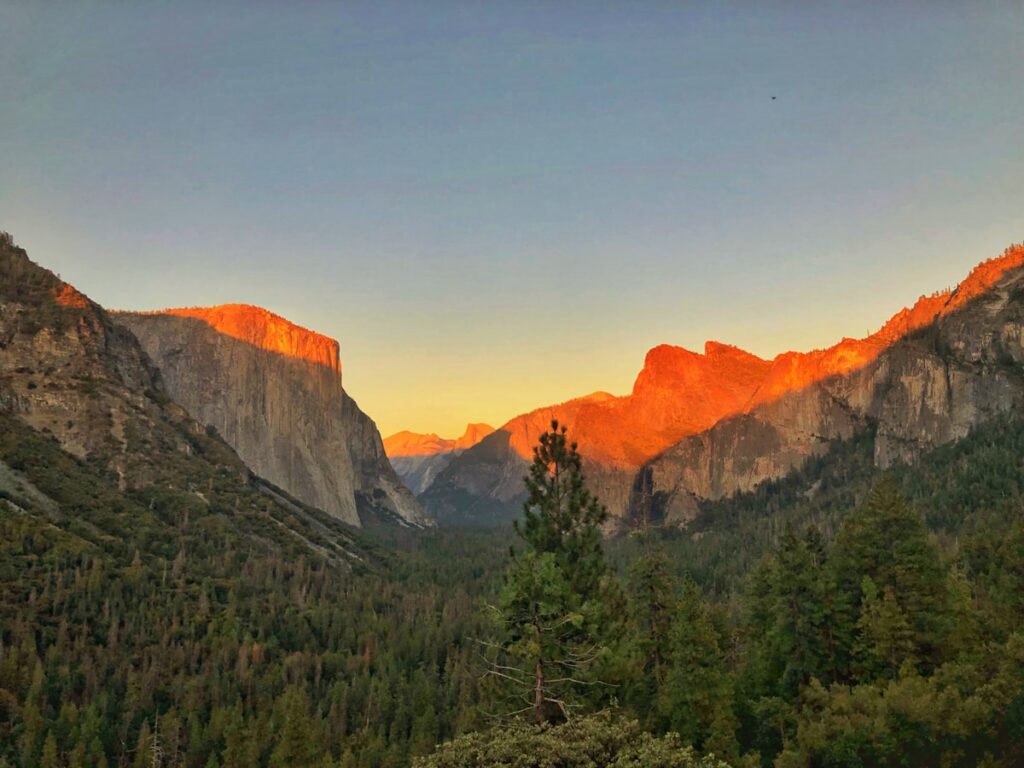
This is why Yosemite is a budget legend: nearly everything that made it famous is free once you’ve paid the entry fee. Tunnel View — the postcard shot of El Capitan, Half Dome, and Bridalveil Fall — is a parking lot pull-off. Lower Yosemite Falls is an easy 1-mile loop to the base of North America’s tallest waterfall, thundering at full power in early summer. The Mist Trail to Vernal Fall is the park’s signature hike and costs nothing but sweat. Glacier Point, reachable by car, serves up the best view of Half Dome anywhere. Tioga Road through the high country and the giant sequoias of Mariposa Grove round out a hit list that would cost hundreds in guided-tour fees anywhere else.
Free ranger walks, evening programs, and campfire talks run daily in summer — grab the park newspaper at the gate for the schedule. The paid extras (guided bus tours, bike rentals at $40+/day, raft rentals) are entirely optional. You can fill four full days without spending a dollar past the gate.
The Real Cost to Visit Yosemite: Sample Budget
Here’s a realistic 3-night camping trip to Yosemite for two people:
| Expense | Cost |
|---|---|
| Entry fee (vehicle pass) | $35 |
| NPS campground (3 nights × $36) | $108 |
| Gas (Central California round trip + park driving) | $100 |
| Groceries and food (3 days, 2 people) | $90 |
| One dinner out in Mariposa or Oakhurst | $50 |
| Total | ~$383 for two (~$192/person) |
That’s the actual cost to visit Yosemite for a 3-night camping trip — under $200 per person, everything included. A family of four sharing one campsite adds mostly food: figure $550–$700 total. Swap camping for a Mariposa motel and add roughly $120–$180 a night. If you already have an America the Beautiful Pass, knock $35 off every number above.
Tips for Cutting the Cost to Visit Yosemite
Book your campsite the second reservations open. Mark the 15th of the month, five months before your trip, at 7 a.m. Pacific on Recreation.gov. Summer Valley sites disappear in minutes. The $36/night rate beats every bed within 50 miles — it’s worth the alarm clock.
Ride YARTS instead of driving in. Staying in Mariposa? The $24 round-trip bus drops you in the heart of the Valley and you skip the gas, the 8 a.m. parking-lot circling, and the day-use lot stress entirely. For solo travelers it can genuinely beat the math of driving.
Arrive before 8 a.m. — or after 3 p.m. With no reservation system in 2026, midday entrance lines on summer weekends can stretch past an hour. Early birds get short lines, open parking, and the Valley’s best light. Late arrivals get golden hour at Tunnel View.
Base in Mariposa or Oakhurst, not the Valley. Valley lodging books out months ahead at premium prices. Gateway towns run 30–50% cheaper, have real grocery stores, and put you an easy morning drive (or bus ride) from the action. Browse Mariposa hotels on Booking.com for current rates.
Come in shoulder season. May means waterfalls at maximum thunder; September and October mean warm days, thin crowds, and cheaper gateway hotels. If you only care about the famous falls, know that some (like Yosemite Falls) can slow to a trickle by late August — another reason early summer and shoulder months beat peak July.
Photo by Edward Ma on Unsplash