
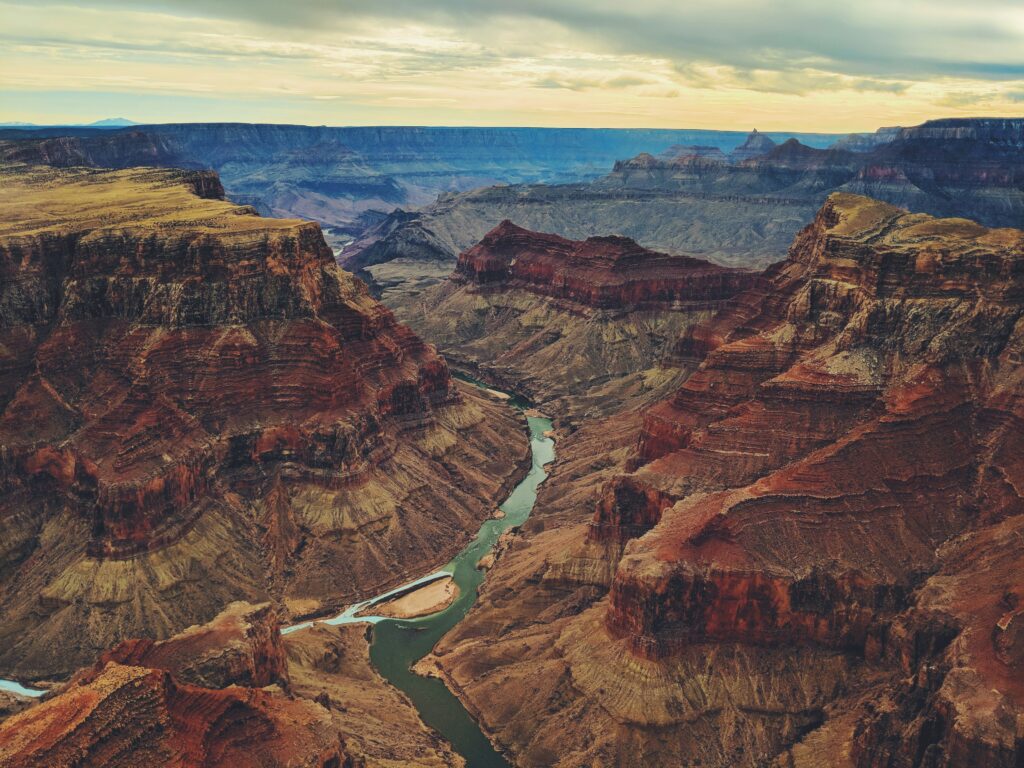
How much does it cost to visit the Grand Canyon? Less than you’d think if you plan it right. The Grand Canyon is one of the most visited places in the country, and one of the most budget-friendly major destinations. A solo traveler can do a solid day trip for $50–$80. A couple can camp for a full weekend for under $250. A family of four can pull off the same trip for $350–$450. Here’s exactly where every dollar goes.
This post contains affiliate links. If you purchase through our links, we may earn a small commission at no extra cost to you — thanks for supporting TravelCheapUS!
Entry Fees
The biggest single line item in the cost to visit the Grand Canyon is the entry fee. The South Rim charges $35 per vehicle for a 7-day pass — that covers everyone in the car, so a family of five pays the same as a solo driver. If you arrive on foot or by bike, it’s $20 per person. Motorcycles are $30.
If you’re visiting more than one national park this year, the America the Beautiful Annual Pass at $80 is the smarter buy. It covers unlimited entry to all 400+ federal recreation areas for a full year. One family paying the $35 vehicle fee twice would spend $70 — the annual pass pays for itself in two visits and leaves the rest of the year free. Buy it at the entrance gate or order it in advance at store.usgs.gov.
Getting There
The South Rim — by far the most visited and most accessible part of the park — is about 4 hours from Las Vegas (230 miles), 3.5 hours from Phoenix (230 miles), and just 1.5 hours from Flagstaff (80 miles). Most visitors drive. Budget $30–$80 in gas depending on your starting point and vehicle.
If you’re flying in from far away, Phoenix Sky Harbor (PHX) and Las Vegas (LAS) are the cheapest nearby airports. Rental cars typically run $35–$65/day. There’s no commercial airport at the South Rim itself, so flying in means you’ll still need to drive the last leg.
Where to Stay
Inside the park, Mather Campground on the South Rim is the budget go-to at $30/night. It has 327 sites, access to showers at a nearby facility, and puts you right on the rim. Reservations open 6 months in advance at Recreation.gov and fill up fast for spring and fall weekends — book the moment they open. Desert View Campground, on the east end of the park, is first-come, first-served and costs less, but has no showers.
The park’s lodges (Bright Angel Lodge, El Tovar, etc.) are convenient but run $130–$300+/night — not a budget move unless you book the cheapest cabin rooms well in advance.
Outside the park, your three main options are Tusayan (1 mile from the entrance, $120–$200/night), Williams, AZ (60 miles south, $60–$100/night), and Flagstaff, AZ (80 miles south, $70–$130/night with hostel options from $30–$50). Williams is the best budget base — cheap lodging, easy highway access, and it adds less than an hour to your morning drive to the rim. Compare current rates for hotels in Williams or Flagstaff on Booking.com to see what’s available for your dates.
Staying in Flagstaff before or after the canyon? See our companion budget directory for free and cheap things to do in Flagstaff.
Food Costs
Food inside the park is expensive. A sit-down meal at El Tovar or Bright Angel Restaurant runs $20–$35 per person. A sandwich from the deli is $12–$15. A coffee is $5. The park knows you’re a captive audience and prices accordingly.
The budget move is to bring everything yourself. Stock up at a grocery store in Williams or Flagstaff before you arrive, pack a portable cooler with sandwiches, snacks, and drinks, and use the picnic tables at the rim viewpoints. Mather Campground has fire rings if you want to cook a hot meal at camp. Doing this cuts your daily food spend from $30–$50 per person down to $10–$15.
What to Do (Most of It Is Free)
This is where the Grand Canyon really delivers for budget travelers — once you’re inside, the best experiences cost nothing. That single fact is what keeps the total cost to visit the Grand Canyon so manageable compared to other bucket-list destinations.
The South Rim Trail is a 13-mile paved path right along the canyon edge with continuous jaw-dropping views — completely free. The Bright Angel Trail drops into the canyon from the village; hiking just 1.5 miles down to the first resthouse gives you an authentic inner canyon experience without committing to a full descent. The South Kaibab Trail offers ridge hiking with 360-degree views — the Ooh Aah Point turnaround at 1.8 miles round trip is one of the best short hikes in any national park.
Free shuttle buses run along Hermit Road (7 miles, 9 overlooks) from March through November, so you can explore the entire rim without moving your car. Ranger-led talks and programs happen daily at the Mather Amphitheater — check the park newspaper (handed out at the entrance) for the schedule.
The paid experiences — helicopter tours ($200–$300/person), mule rides ($145–$650/person), and the IMAX theater in Tusayan ($15/person) — are entirely optional. You can spend a full two days at the Grand Canyon and pay nothing for activities beyond the entry fee.
How Much Does It Cost to Visit the Grand Canyon: Sample Budget
Here’s a realistic 2-night camping trip to the South Rim for two people:
| Expense | Cost |
|---|---|
| Entry fee (vehicle pass) | $35 |
| Mather Campground (2 nights × $30) | $60 |
| Gas (driving from Flagstaff, round trip) | $15 |
| Groceries and food (2 days, 2 people) | $60 |
| One dinner out in Williams or Tusayan | $40 |
| Total | ~$210 for two (~$105/person) |
That’s the realistic cost to visit the Grand Canyon for two people on a 2-night camping trip — well under $110 per person with everything included. For a family of four, double the food budget and add roughly $10–$15 for the extra campsite fee. You’re looking at $330–$380 for the same trip. If you already have an America the Beautiful Pass, subtract $35 from both totals.
Tips for Cutting the Cost to Visit the Grand Canyon
Visit in shoulder season. May and September are the sweet spots — near-perfect rim temperatures (60s–70s°F), manageable crowds, and easier campsite availability. Summer is brutally hot and packed. Spring break weeks are a zoo. Avoid both.
Book Mather Campground the day reservations open. Set a reminder exactly 6 months before your target dates. Spring and fall weekends sell out within hours. The $30/night rate inside the park is still far cheaper than any hotel nearby — don’t lose it by waiting.
Base yourself in Williams, not Tusayan. Tusayan charges resort prices for average hotels and mediocre food. Williams is 60 miles south, costs half as much, and adds about 50 minutes to your morning drive — worth every minute of it. Browse Williams hotels on Booking.com for current rates.
Park once and use the free shuttles. Parking inside the park is free but limited. Pull into the main Visitor Center lot and let the shuttle system do the work. The buses run frequently and stop at every major viewpoint and trailhead on the South Rim.
Hike early. Sunrise at the Grand Canyon is one of the great free experiences in American travel, and you’ll have the most popular viewpoints nearly to yourself. The canyon is wall-to-wall tour buses between 10am and 3pm. Get out there by 7am and you’ll feel like you have the place to yourself.
Photo by Sonaal Bangera on Unsplash