
These budget summer camping tips exist because camping has quietly gotten expensive if you do it the default way — $50 KOA sites, $300 of impulse gear, and cooler food that costs more than restaurant meals. Done smart, a family camping weekend still costs less than a single night at a roadside hotel. With the 4th of July coming up fast, here’s how real families keep a summer of camping trips under control — where to camp, what gear actually matters, and how to feed four people outdoors without torching the grocery budget.
This post contains affiliate links. If you purchase through our links, we may earn a small commission at no extra cost to you — thanks for supporting TravelCheapUS!
Pick the Right Campground (This Is 80% of the Budget)
Where you camp matters more than anything you pack. The price spread is enormous:
- National forest campgrounds: $10–$25/night. The most underrated option in America. Often just outside national park boundaries with the same scenery, half the price, and a fraction of the booking competition.
- Dispersed camping on national forest and BLM land: free. No bathrooms, no picnic table, no neighbors. With kids it’s an adventure — just bring water and know the rules. Our free camping guide covers exactly how to find legal spots.
- State parks: $20–$35/night. The family sweet spot — real bathrooms, swim beaches, ranger programs, and usually easier to book than anything federal.
- National park campgrounds: $20–$45/night. Iconic, but the hardest reservations in the country during summer.
- Private campgrounds and KOAs: $40–$90/night. Pools and Wi-Fi are nice, but at that price you’re halfway to a motel. Use them for one-night stopovers, not week-long stays.
The simple move that saves the most money: camp in the state park or national forest next to the famous destination instead of inside it. You’ll pay less, book easier, and drive 20 extra minutes.
Book Smart for July and August
Summer weekends — especially the 4th of July — are the Super Bowl of campground booking. Federal sites on Recreation.gov open on a rolling 6-month window, so the holiday weekends are long gone. That doesn’t mean you’re out of luck:
- Set cancellation alerts. Services like Campnab scan for cancellations and text you the moment a site opens up. Families cancel constantly the week before a holiday.
- Go Thursday–Saturday instead of Friday–Sunday. Thursday-night availability is dramatically better, and you’ll drive home on the quiet day.
- Try first-come, first-served loops. Many state parks and most national forest campgrounds hold sites back. Arrive Thursday before noon and your odds are good even in July.
- Mark July 3–5 on the calendar. Every national park waives entrance fees that weekend in 2026 — pair a cheap national forest campsite with free park day trips and the whole weekend’s fixed costs drop under $50.
Don’t Buy Gear Like a Catalog Family
The camping industry would love you to spend $1,500 outfitting the family. You don’t need to. A solid starter setup for four — tent, sleeping bags, foam pads, lantern, and a basic stove — can come in around $250–$300 new if you stick to store brands. A 6-person Ozark Trail dome tent runs $79–$129 at Walmart, summer-weight sleeping bags are $15–$25 each, and a two-burner propane stove is about $45.
Better yet, spend less than that: borrow from friends for your first trip (most camping gear in America sits in garages 50 weekends a year), check Facebook Marketplace and thrift stores where barely-used tents go for half price, or look into gear rentals at REI if you only camp once a summer. If you do buy, a basic family camping kit plus a good cooler covers 90% of what you’ll actually use. Skip the camp kitchen gadgets, the propane fire pit, and anything sold as “glamping” — your kids genuinely will not notice.
Feed the Crew for $10 a Person a Day
Camp food goes one of two ways: cheap and great, or expensive and mediocre. The expensive version happens when you buy specialty “camping food,” forget key items, and end up driving to the nearest tourist-town store twice a day. The cheap version takes one grocery run and a plan:
- Plan every meal before you shop. Three breakfasts, three lunches, three dinners, snacks. Write it down. A planned $90 grocery run beats $150 of improvising.
- Lean on the campfire classics. Foil-packet dinners (potatoes, sausage, peppers), hot dogs, pancakes, and s’mores are beloved precisely because they’re cheap, easy, and kid-approved.
- Freeze water bottles instead of buying ice. They keep the cooler cold for days, then become cold drinking water. Freeze your meat too — it thaws by night two.
- Bring the condiments and spices from home. The $30 you’d spend re-buying ketchup, oil, and salt at a camp store is pure waste.
The Entertainment Is Already Free
This is the part families forget when they’re budgeting: once you’re at camp, there’s nothing left to pay for. Swimming holes, creek stomping, bike loops, fishing (kids under 16 fish free in most states), evening ranger programs, and the eternal entertainment of poking a campfire with a stick — all included in your campsite fee. Most state parks run free junior ranger or nature programs all summer, and national parks hand out Junior Ranger booklets free at every visitor center. If you’ve got a 4th grader, the Every Kid Outdoors pass gets your whole family into every national park free for a year.
Compare that to any other family weekend — movies, mini golf, theme parks — where the activities are the budget. Camping flips the equation: you pay once for the site, and the fun is unlimited.
Comfort Is a Budget Strategy
Here’s the unglamorous truth: the most expensive camping trip is the one you abandon at 11 p.m. because everyone’s miserable. A few cheap moves protect the whole investment:
- Shade beats square footage. Pick a shaded site over a big one — July tents become ovens by 8 a.m. in full sun.
- Pads under sleeping bags, always. $15 foam pads are the difference between “let’s do this again” and “never again.”
- Bug spray and a box fan. If your site has electric (most state park sites do), a $20 box fan turns a sweaty tent into a sleepable one.
- Do a backyard test run. Pitch the tent at home first. Every gear problem you find in the backyard is one you don’t find at 9 p.m. in a campground.
Budget Summer Camping Tips in Action: A Sample Weekend
Here’s what a 2-night state park weekend looks like for a family of four that follows these budget summer camping tips:
| Expense | Cost |
|---|---|
| State park campsite (2 nights × $25) | $50 |
| Park entrance/day-use fees | $10 |
| Gas (150-mile round trip) | $20 |
| Groceries (2 days, 4 people) | $80 |
| Firewood and ice | $15 |
| Activities | $0 |
| Total | ~$175 for a family of four |
That’s a full weekend outdoors for less than one night in a mid-range hotel — and it’s repeatable all summer. Do it four times between now and Labor Day and you’ve given the kids a summer of trips for the price of one conventional weekend getaway. That’s the whole point of budget summer camping tips: they don’t just save money once, they make travel something your family can afford to do often.
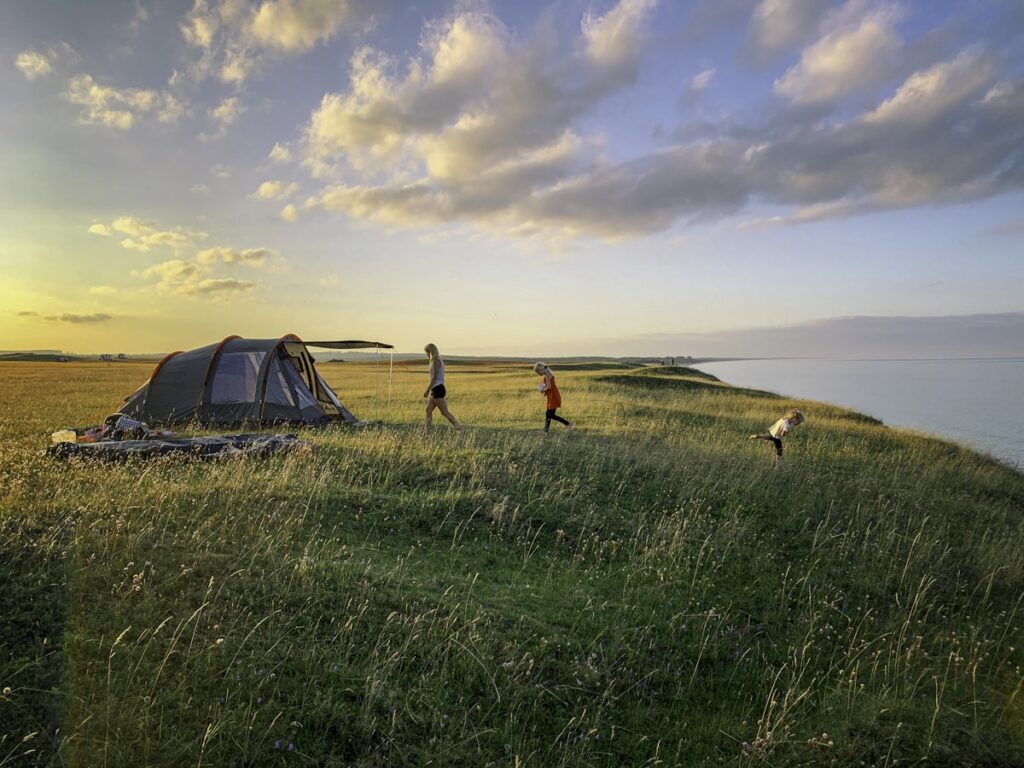
Photo by Mattias Helge on Unsplash