
Food is one of the biggest budget-busters when you travel. Three sit-down meals a day at tourist-area restaurants can easily run $60–$80 — and that’s before drinks or dessert. But here’s the thing: you don’t have to choose between eating well and keeping your wallet intact. With the right approach, $20 a day is totally doable — and you won’t be living on gas station snacks to get there.
Here’s exactly how to make it work.
1. Make the Grocery Store Your Best Friend
This is the single biggest move you can make. A $6 rotisserie chicken, a loaf of bread, some fruit, and a bag of salad greens from a grocery store will cover two to three meals for around $15 total. That same food from a restaurant? Easily $40+.
Hit the grocery store on your first day and stock up on easy items: sandwich fixings, yogurt, granola bars, bananas, and a few drinks. You’re not cooking elaborate meals — you’re just replacing one or two restaurant meals a day with something simple and cheap.
Chains like Trader Joe’s, Aldi, and Walmart Neighborhood Market are your best bets for low prices. If you’re in a city, look for ethnic grocery stores — they almost always have better prices than standard supermarkets.
2. Book Accommodations With a Kitchen (or At Least a Fridge)
An Airbnb or vacation rental with a kitchen might cost $20–$30 more per night than a basic hotel — but if you’re cooking even one meal a day, you’ll save that back easily. A pot of pasta with jarred sauce costs about $3 and feeds two people. That’s hard to beat.
If a full kitchen isn’t in the budget, even a mini fridge and microwave (common in extended-stay hotels and many motels) opens up a lot of options: overnight oats, microwaveable rice cups, deli sandwiches, and leftovers from last night’s dinner.
3. Eat One “Real” Meal Out Per Day — Make It Lunch
You don’t have to swear off restaurants entirely. The trick is being strategic about it. Lunch menus at sit-down restaurants are almost always cheaper than dinner — same kitchen, same food, smaller price tag. Many places offer lunch specials for $10–$14 that would run $20–$25 at dinner.
Make lunch your one real meal out, keep breakfast and dinner simple, and you’ll stay well under budget while still getting to enjoy local food. That’s the whole point of traveling, after all.
4. Go Where Locals Actually Eat
The restaurant right next to the main tourist attraction is going to charge tourist prices. Walk two or three blocks away and prices drop significantly. Ask your Airbnb host, hotel front desk staff, or just look at where the parking lots are full at noon — that’s usually a reliable sign you’ve found somewhere locals actually eat.
Some of the cheapest and best food in the country comes from:
- Food trucks — $8–$12 for a full meal, often outstanding quality
- Ethnic restaurants — Vietnamese, Thai, Mexican, Indian, and Ethiopian spots routinely deliver enormous portions for $10–$14
- Diners and local breakfast spots — A full eggs-and-toast breakfast for $8–$10 is still easy to find outside major cities
- Cafeteria-style spots — Meat-and-three restaurants in the South, steam table spots in cities — you pick your items, pay by the plate, and eat a lot for not much
5. Take Full Advantage of Free Breakfast
If your hotel offers free breakfast, use it — aggressively. Load up on eggs, toast, fruit, yogurt, and coffee. Not only does this cover your morning meal for free, but if you’re smart about it (and not too proud), you can pocket a banana and a granola bar for a mid-morning snack. That’s $5–$8 you just saved before 9 a.m.
Hotel chains like Hampton Inn, Fairfield by Marriott, La Quinta, and most Holiday Express locations include free hot breakfast. Factoring this into your accommodation choice can make a real difference in your daily food budget.
6. Pack Snacks From Home
Snacks at airports, tourist spots, and hotel vending machines are some of the most overpriced food you’ll ever encounter. A bag of chips for $4. A granola bar for $3.50. A bottle of water for $5. It adds up fast.
Before you leave home, throw a ziplock bag of snacks into your bag: protein bars, trail mix, crackers, single-serve peanut butter packets, beef jerky. These hold you over between meals, keep you from making desperate expensive food decisions, and cost a fraction of what you’d pay on the road.
7. Use Apps to Find Cheap Eats Fast
You don’t have to wander around hoping to stumble onto something affordable. A few apps make finding cheap food easy:
- Yelp — Filter by “$” or “$$” and sort by distance. Read recent reviews to make sure quality hasn’t slipped.
- Google Maps — Search “cheap eats near me” or a specific cuisine plus your location. The reviews and photos are usually reliable.
- Too Good To Go — Restaurants and bakeries sell surplus food at the end of the day for $3–$6. Not available everywhere, but in most mid-size and large cities.
- HappyCow — If you’re open to vegetarian spots, these are often significantly cheaper than meat-heavy restaurants.
8. Time Your Meals Around Happy Hour and Specials
Happy hour isn’t just about drinks. Many bars and restaurants offer discounted appetizers and small plates from around 3–6 p.m. — often the same food as the dinner menu at half the price. A couple of happy hour apps can easily replace a full dinner for under $12.
Also worth checking: daily specials. Many local restaurants run Tuesday taco specials, Wednesday wing nights, or weekday lunch deals that don’t show up on the regular menu. A quick look at their social media or just asking your server what’s on special is usually all it takes.
What a $20 Food Day Actually Looks Like
Here’s a realistic breakdown:
- Breakfast: Yogurt and a banana from the grocery store — $2
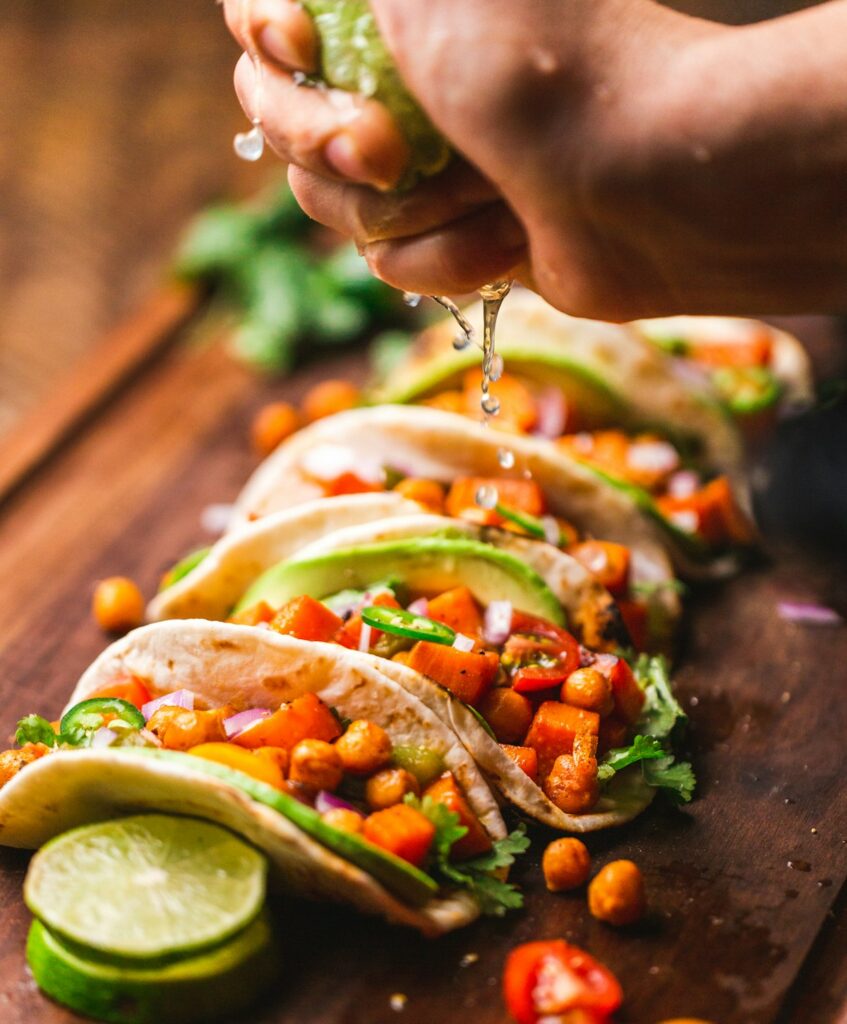
- Lunch: Taco truck — two tacos and a agua fresca — $9
- Snack: Granola bar from your bag — $0
- Dinner: Grocery store rotisserie chicken + bagged salad — $8
- Total: $19
Filling? Yes. Boring? Not at all. You had tacos from a local spot and a solid dinner — and you still came in under budget.
The Bottom Line
Eating on $20 a day while traveling isn’t about deprivation — it’s about making smarter choices. Skip the tourist traps, lean on grocery stores for breakfast and dinner, make lunch your one real meal out, and pack snacks so you’re never desperate. Do that consistently and you’ll eat well, stay satisfied, and keep way more money in your pocket for the parts of the trip that actually matter.
Have a go-to trick for eating cheap on the road? Drop it in the comments — we’d love to hear what’s working for you.
Photo credit: Eduardo Ramos on Unsplash